

Installing solar panels allows a private home to partially or fully cover its electricity needs using sunlight. A properly selected system reduces electricity costs and decreases dependence on the external grid. For property owners, not only the equipment capacity matters, but also the total project cost. A professional calculation of solar panel installation cost residential helps determine the budget in advance, select the necessary equipment, and avoid unnecessary expenses. The installation itself is carried out in several stages: from roof inspection to connection and testing of the solar power system.
Preparation for Installing a Solar Power System
Before work begins, specialists assess the technical condition of the building, the characteristics of the roof, and the actual electricity consumption. This is necessary to determine the appropriate system capacity and the location of the modules.
At the preparation stage, the following work is carried out:
- The strength of the roof, the condition of the roofing material, and the supporting structures are checked.
- The area available for installing solar panels is determined.
- The roof orientation, angle of inclination, and shading from trees or neighboring buildings are assessed.
- Electricity consumption over the last 12 months is analyzed.
- The capacity of the solar power system, inverter, and mounting components is selected.
A residential 5 kW system usually requires around 22–28 m² of space when modern modules are used. The exact figure depends on the size of the panels and the specifics of their placement.
Special attention is paid to shading. Even a small shadow from a chimney can reduce the output of individual modules, especially if they are connected in series without power optimizers.
Choosing Equipment and Calculating Capacity
The basis of a residential solar power system consists of photovoltaic modules that convert sunlight into direct electric current. The inverter converts it into alternating current required for household appliances.
A standard system includes:
- Solar panels with a capacity of approximately 400–500 W each.
- A grid-tied or hybrid inverter.
- Aluminum mounting profiles and fasteners.
- Electrical cables, circuit breakers, and protective devices.
- An electricity generation monitoring system.
If necessary, batteries are installed to store energy. They make it possible to use accumulated electricity in the evening or during grid outages if the inverter supports backup power.
Climate conditions are taken into account when calculating performance. For example, in the Netherlands, a 1 kW system usually generates approximately 850–1000 kWh of electricity per year when installed under favorable conditions.
How Solar Panels Are Installed on the Roof
After the project is approved, installers begin mounting the support system. The sequence of work depends on the roofing material and its construction.
The main installation stages are:
- The mounting points are marked with the position of the rafters and allowable loads taken into account.
- Roof brackets and mounting rails are installed.
- The solar modules are secured to the prepared base.
- Electrical cables are laid with protection against damage.
- The panels are connected to the inverter according to the electrical diagram.
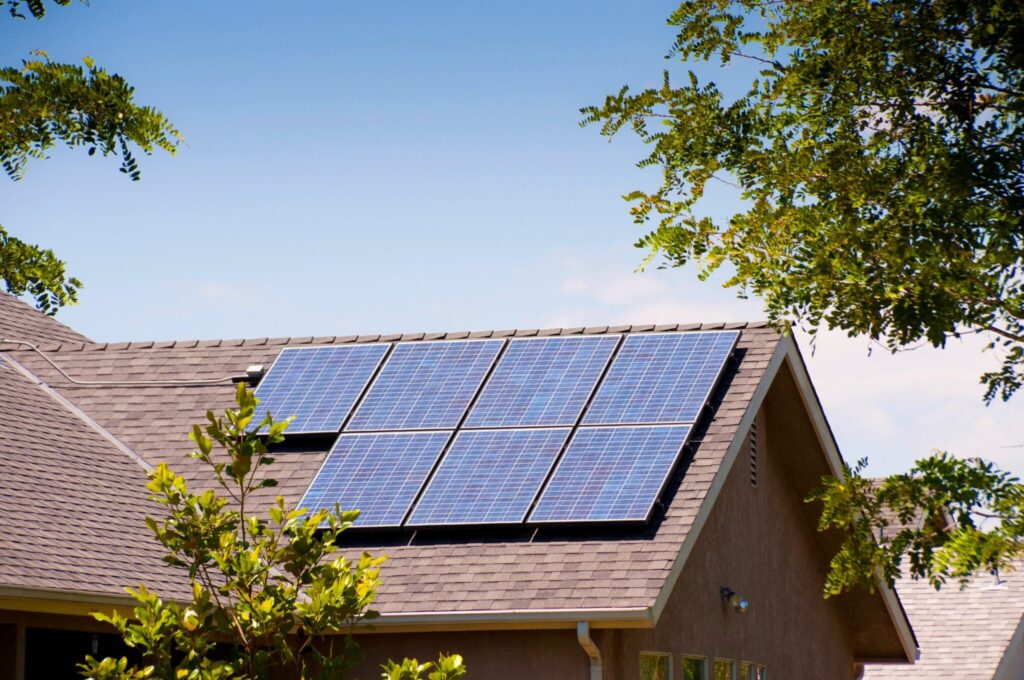
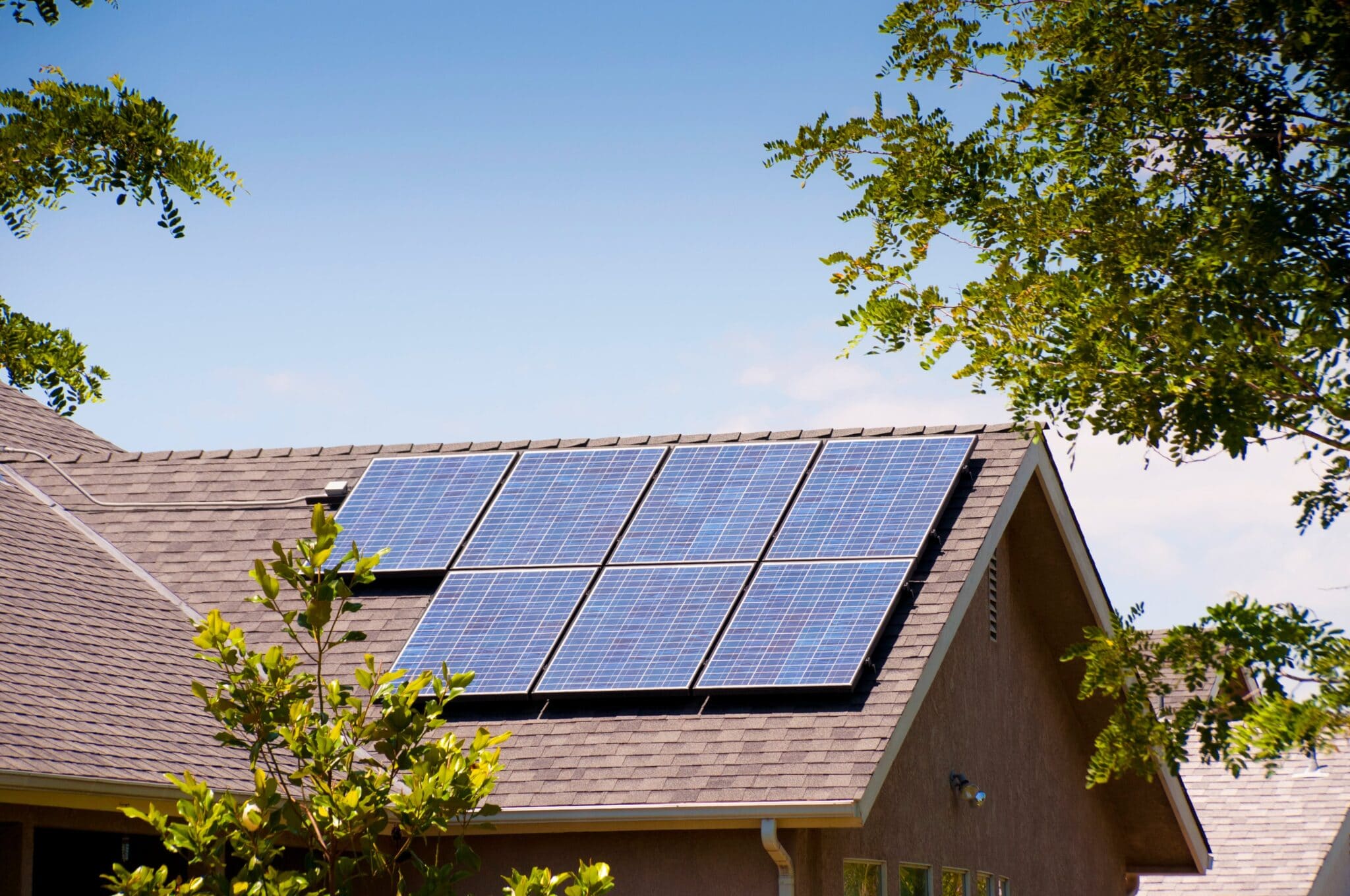
On pitched roofs, panels are usually installed parallel to the roofing surface. For flat roofs, special structures are used to provide the required angle of inclination.
Installing a small residential system often takes one or two working days. However, a complex roof, the need to reinforce structures, or additional electrical work can increase the installation time.
Connecting the System and Checking Safety
The final stage includes connecting the inverter to the home electrical panel and configuring the equipment. The electrician checks the correctness of the connections, grounding, operation of protective circuit breakers, and compliance of the installation with electrical safety requirements.
After the inspection, the system is started and electricity generation indicators are monitored. The owner is shown how to use the monitoring application, track electricity production, and identify possible faults.
High-quality solar panel installation requires accurate calculations, reliable mounting systems, and professional electrical connection. When installation technology is followed, modern modules can operate for 25–30 years or longer while gradually losing part of their initial capacity. Proper maintenance helps preserve the performance of the solar power system throughout its service life.