
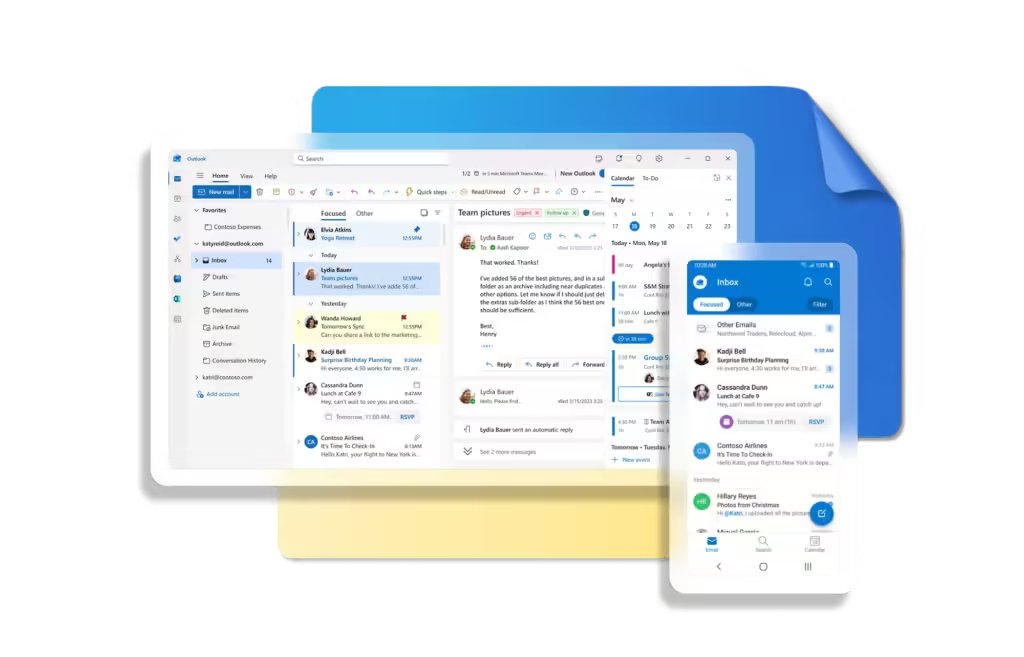
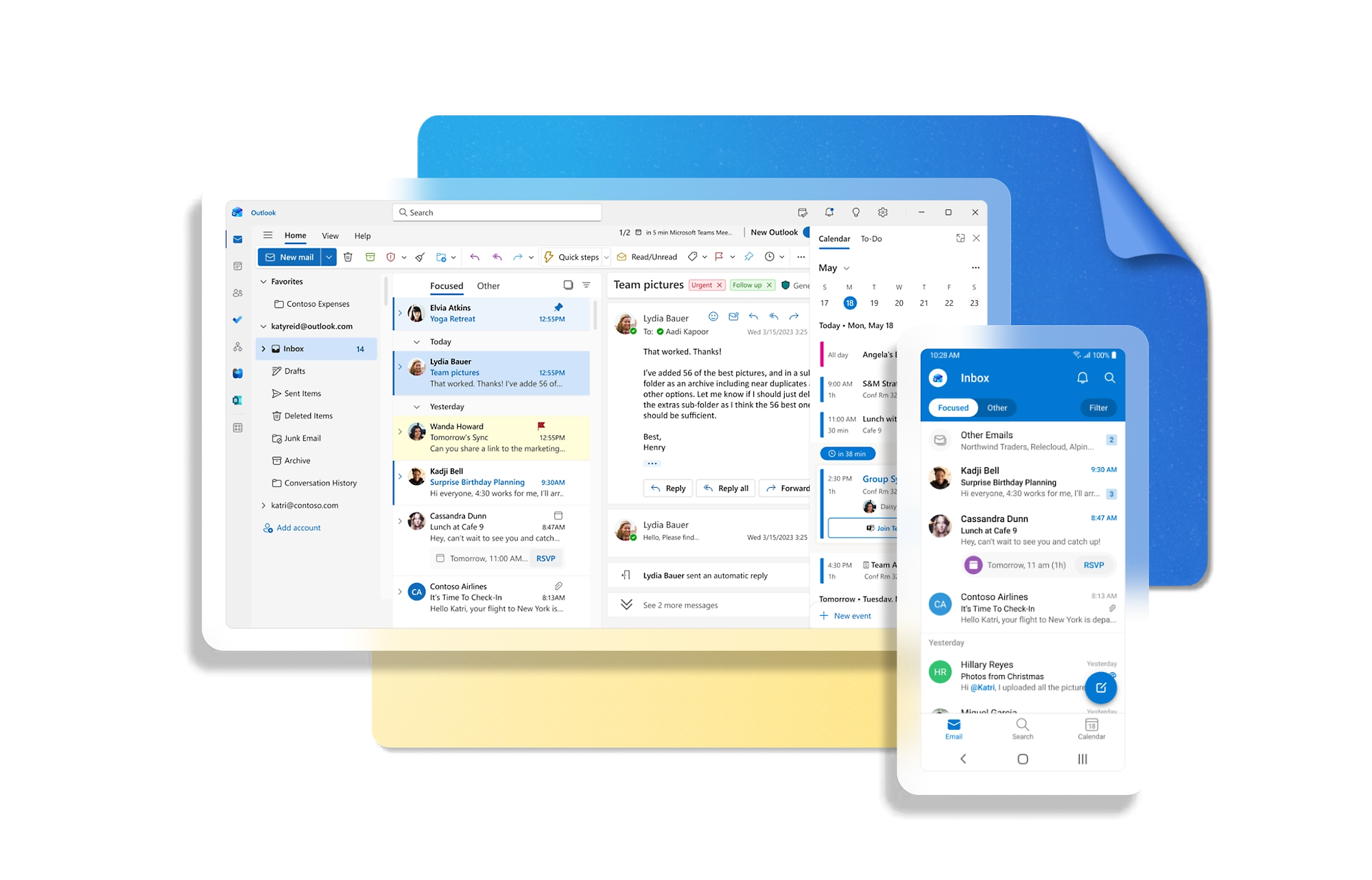

Email remains one of the core tools of business communication. According to international research, more than 90% of companies use email as their primary channel for interacting with clients and partners. In professional environments, the phrase Buy Outlook account is often discussed when it comes to quickly launching projects, scaling marketing, or distributing workflows across teams. This is largely due to the fact that Outlook is part of the Microsoft ecosystem and enjoys a high level of trust among services and advertising platforms.
Use in marketing and lead generation
In digital marketing, email is not just a communication tool but a full-fledged channel for attracting customers. Outlook accounts are widely used in email campaigns, working with advertising platforms, and registering on various services.
Main purposes of purchasing accounts for marketing:
- Bulk registration on advertising platforms and SaaS services;
- Creating separate mailboxes for different projects and sales funnels;
- Splitting email flows to reduce the risk of blocks;
- Running cold outreach campaigns and testing hypotheses.
One of the key challenges marketers face is limitations on the number of registrations and strict anti-spam policies. Buying ready-made accounts allows faster campaign scaling without spending weeks warming up new email addresses.
Traffic arbitrage and advertising campaigns
In traffic arbitrage and performance marketing, email is used for registering ad accounts, confirming profiles, and working across multiple platforms. According to market estimates, up to 60% of specialists in this field use multiple email accounts simultaneously.
Reasons why Outlook accounts are in demand:
- High trust level from advertising networks;
- Integration with Microsoft services and third-party tools;
- Reliable delivery of emails and confirmations;
- Ability to distribute risks across multiple accounts.
Relying on a single mailbox can be risky — any block may stop advertising campaigns and lead to financial losses. That is why professionals often maintain backup accounts.
Working with international services
Outlook is a global service accepted in most countries and platforms. This is especially important for companies entering international markets or working with foreign partners.
Common use cases:
- Registering accounts on marketplaces and B2B platforms;
- Creating profiles on social networks and ad platforms;
- Connecting CRM systems and cloud services.
In practice, new email accounts often trigger additional checks or restrictions. Accounts with history tend to appear more trustworthy and pass moderation faster.
Testing and launching new projects
When launching a new product or service, companies need to test hypotheses quickly. For this purpose, separate email accounts are often used for:
- Test user registrations;
- Checking email campaigns and automation flows;
- Connecting analytics systems;
- Separating departments and internal processes.
Without additional accounts, employees may start using personal emails, which creates risks of data leaks and confusion in access management. Ready-made solutions help build a structured system from the start.
Reputation management and security
Email directly affects business reputation. Poor-quality mailing lists or improperly configured campaigns can lead to account restrictions. Large companies often use a segmentation strategy: separate accounts for marketing, support, and technical notifications.
This approach allows you to:
- Reduce the risk of complete communication shutdown;
- Monitor delivery and open rates;
- Track performance metrics for each function separately.
According to email marketing research, the average open rate for business emails is around 21–25%. With proper account structuring, this indicator can remain stable over time.
Ultimately, buying an Outlook account can be a useful tool for business, marketing, and scaling projects when used strategically. The key is to clearly define goals, assess risks, and build processes in a way that email remains an efficient tool rather than a source of problems.